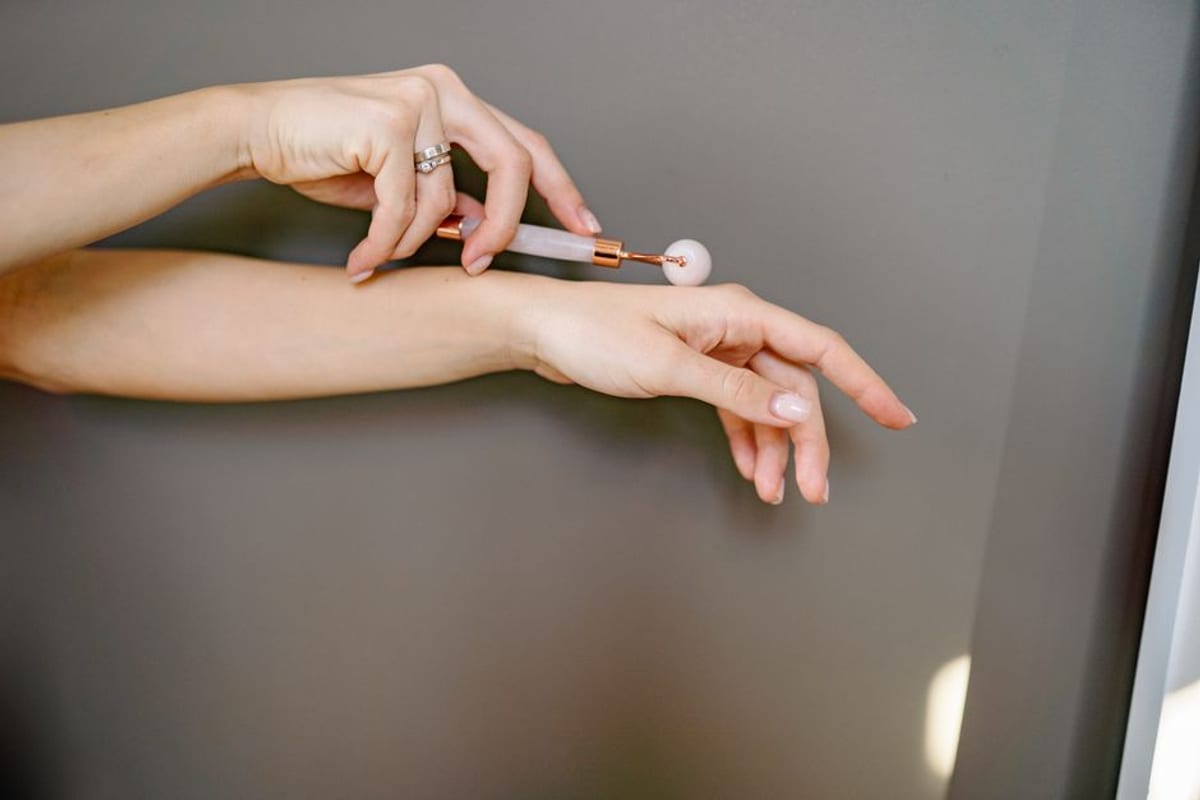
These two get recommended in the same breath constantly, as though they’re variations on one idea. They aren’t. One moves fluid, the other works muscle, and picking the wrong one means months of effort aimed at the wrong problem.
The short version
Gua sha moves lymphatic fluid toward drainage points. Effects appear within one session and fade within a day.
Face yoga contracts muscles to build tone. Effects take months and fade over weeks if you stop.
Both are cheap and low-risk. Neither changes bone, fat or skin quality. What separates them is which layer of your face they act on and how quickly.
| Gua sha | Face yoga | |
|---|---|---|
| What it acts on | Lymphatic fluid sitting under the skin | The muscles under that |
| When you see it | The same session | Weeks. The one study behind it ran twenty before measuring |
| How long it holds | Back to baseline within a day | Fades over weeks once you stop |
| Time it asks for | Five to ten minutes, daily | Ten to thirty minutes, with rest days |
| What it costs | A stone, bought once | Nothing |
| Easiest way to get it wrong | Pressing hard, or working on dry skin | Quitting at week three, before the timeline the evidence describes |
| When to skip it | Broken or irritated skin, or if you bruise easily | Jaw resistance work if you already clench or grind |
| Best suited to | Morning puffiness, and a tight jaw that needs releasing | Tone in the lower face, over months |
Which problem are you solving
The useful question isn’t which technique is better, it’s what’s actually bothering you.
“My face looks puffy in the morning.” That’s fluid. Gua sha, or plain lymphatic massage with your hands. You’ll see the difference the same morning.
“My jaw feels tight and I wake up with headaches.” That’s muscle tension, most likely clenching. Gua sha on the masseter helps the muscle release. Face yoga resistance work may make it worse.
“The lower half of my face has lost definition over the years.” That’s the one face yoga is aimed at. It’s also the slowest, and results depend on whether the change is muscle tone, fat redistribution or skin laxity. Only the first responds.
“I have a double chin.” Depends what it’s made of. Fluid responds to gua sha, muscle tone responds to face yoga, and fat responds to neither.
Time and payoff
Gua sha costs five to ten minutes and pays out immediately, every time, in a small way. It’s the better option if you want something that feels worthwhile from day one.
Face yoga costs ten to thirty minutes and pays nothing for weeks. The study behind it ran twenty weeks before measuring. Most people quit somewhere around week three, having concluded it doesn’t work, when what actually happened is they stopped before the timeline the evidence describes.
That difference in feedback loops matters more than any comparison of mechanisms. A technique you’ll keep doing beats a better technique you’ll abandon.
Can you do both
Yes, and they combine sensibly, because they act on different things.
A reasonable arrangement: gua sha in the morning when fluid retention peaks, face yoga in the evening when you’re not rushing. Or gua sha daily and face yoga three times a week, since muscle work benefits from recovery days in a way drainage doesn’t.
One caution. If you clench your teeth, be careful about stacking masseter work from both practices onto an already overworked muscle. In that case use gua sha for release and skip the jaw-resistance exercises entirely.
What a realistic week looks like
Advice usually stops at “do both”, which ignores that most people have about ten minutes and a limited supply of enthusiasm. So here’s what fits into an actual week.
If you have five minutes a day: gua sha every morning. Nothing else. This is the version most people can keep up, and consistency here beats an ambitious plan you follow for nine days.
If you have fifteen minutes a day: gua sha in the morning, face yoga three evenings a week. The rest days aren’t laziness. Muscle responds to recovery, and daily resistance work on a small muscle group has diminishing returns.
If you have thirty minutes and genuine commitment: the schedule from the Northwestern study, which is where the only real evidence comes from. Half an hour daily for eight weeks, then every other day. Add gua sha whenever your face feels puffy.
Notice that the first option appears in all three. Drainage is the part with immediate payoff, and it’s the habit worth protecting when the week goes wrong.
Mistakes that apply to both
Pressing too hard. The most common error across both practices. Lymphatic vessels sit just under the skin and close under pressure. Facial muscles are small and don’t need force.
Working upward on the neck. Everything on the neck moves down, toward the collarbone. Upward strokes push fluid back toward a face that’s already holding it.
Expecting the mirror to answer quickly. Fluid changes show the same morning. Muscle tone takes months. Judging either on the wrong timescale leads to quitting the one that was working.
Doing it on dry skin. Applies to gua sha specifically, and it’s the fastest way to irritate your face while believing you’re improving it.
Adding jaw work when you already clench. Worth repeating because it’s counterintuitive: if your jaw is tight from grinding, more jaw exercise is not the answer.
Where devices come in
Microcurrent occupies the space between these two. It contracts facial muscles electrically, which is the same target as face yoga, without requiring you to learn or perform anything.
That’s genuinely the appeal: it removes the technique problem, which is the main reason face yoga fails for people. It also costs between £150 and £400, needs near-daily use to maintain results, and gets abandoned more often than almost any other home beauty device.
The question worth asking before buying one is whether you’ve managed a daily face routine of any kind for a month. If not, a device won’t create the habit. It’ll join the drawer.
What neither does
Neither removes fat. Not the stone, not the exercises, not the device.
Neither tightens loose skin. Skin laxity is a change within the skin, and none of these acts on it.
Neither changes bone. The shape of your jaw is skeletal and stays where it is.
Neither is permanent. Fluid comes back within a day. Muscle tone fades within weeks of stopping. This is maintenance, not a fix.
If you want one answer
Start with gua sha.
It’s cheaper, it takes less time, the feedback comes immediately, and the technique is easier to get right. If after a couple of months you’re still doing it and want more, add face yoga or look at a device.
Starting with the harder, slower option is how most people end up doing neither.